On The Menu: The Cannibal-Culinary Story
The cannibal-chef revels in cooking, eating and serving lavish meals that induce hunger through elegant plating and presentation. Verve dissects the nuances of the subgenre in pop culture and the questions it raises around elitism, desire, morality and more…
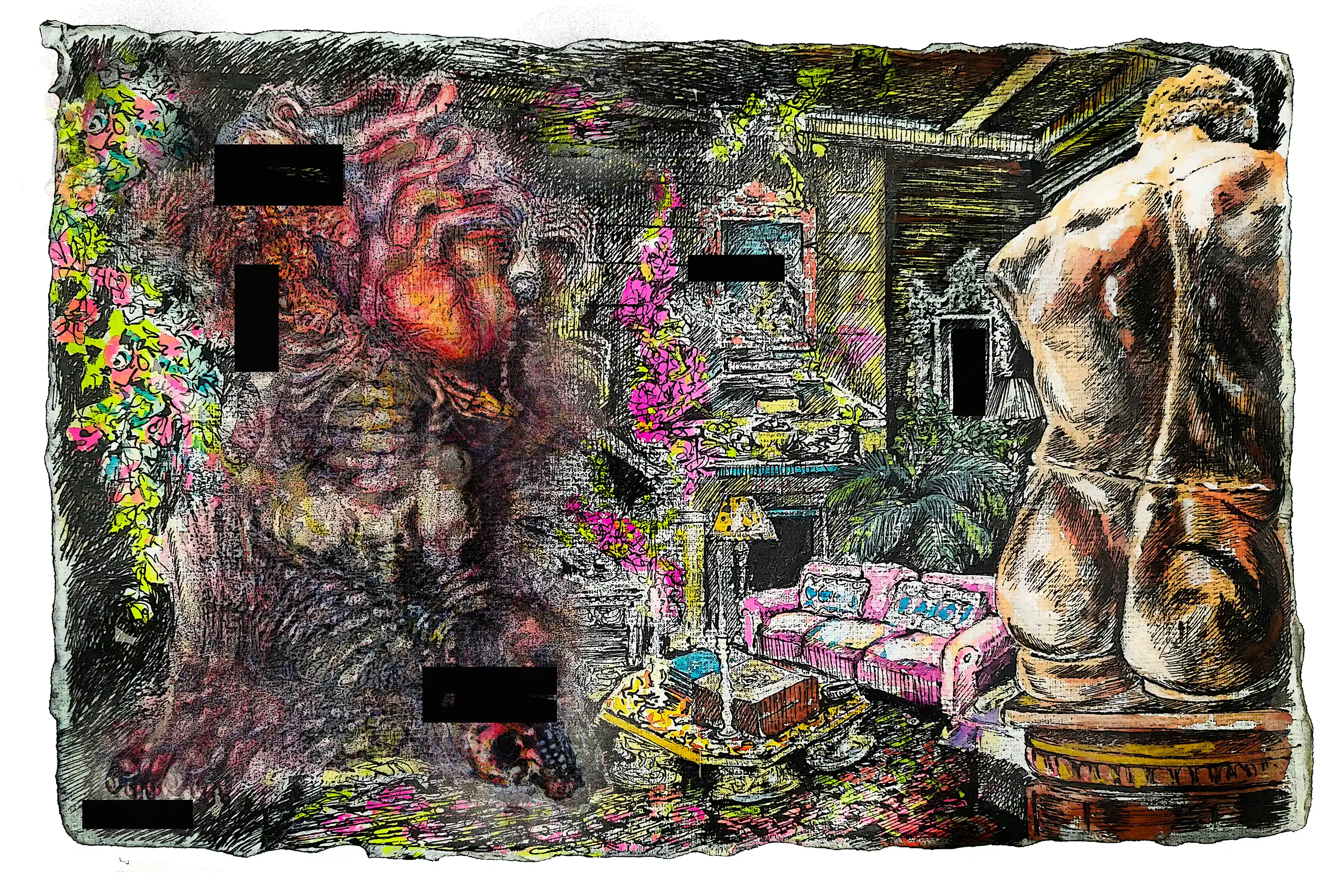
Content advisory: This article contains references to cannibalism, including graphic descriptions and visuals that some readers may find unsettling, triggering and/or culturally sensitive. Reader discretion is advised.
“A census taker once tried to test me. I ate his liver with some fava beans and a nice bottle of Chianti.” And to make sure FBI trainee Clarice Starling (Jodie Foster) understands just how much he savours this meal, Dr Hannibal Lecter (Anthony Hopkins) follows it up with that iconic, improvised slurp.
However, The Silence of the Lambs’ (1991) cannibal psychiatrist, who has a penchant for classical music along with figure and landscape drawing, is seen, for the most part, in jail. Not that it stops him from indulging in his very peculiar tastes — he eats the prison guards assigned to watch over him — but jail keeps him from the pleasures of cooking, dining and hosting: activities we see him taking great relish in, in later films of the franchise. In Hannibal (2001), next to a table richly laid out with candle stands and bottles of wine, Lecter slices a portion of a drugged justice department official’s brain and sautés it with butter, shallots and caperberries before feeding it to the man. In Red Dragon (2002), the “divine-looking” amuse-bouche he serves at one of his lavish soirèes is presumably made from the remains of an off-key musician.
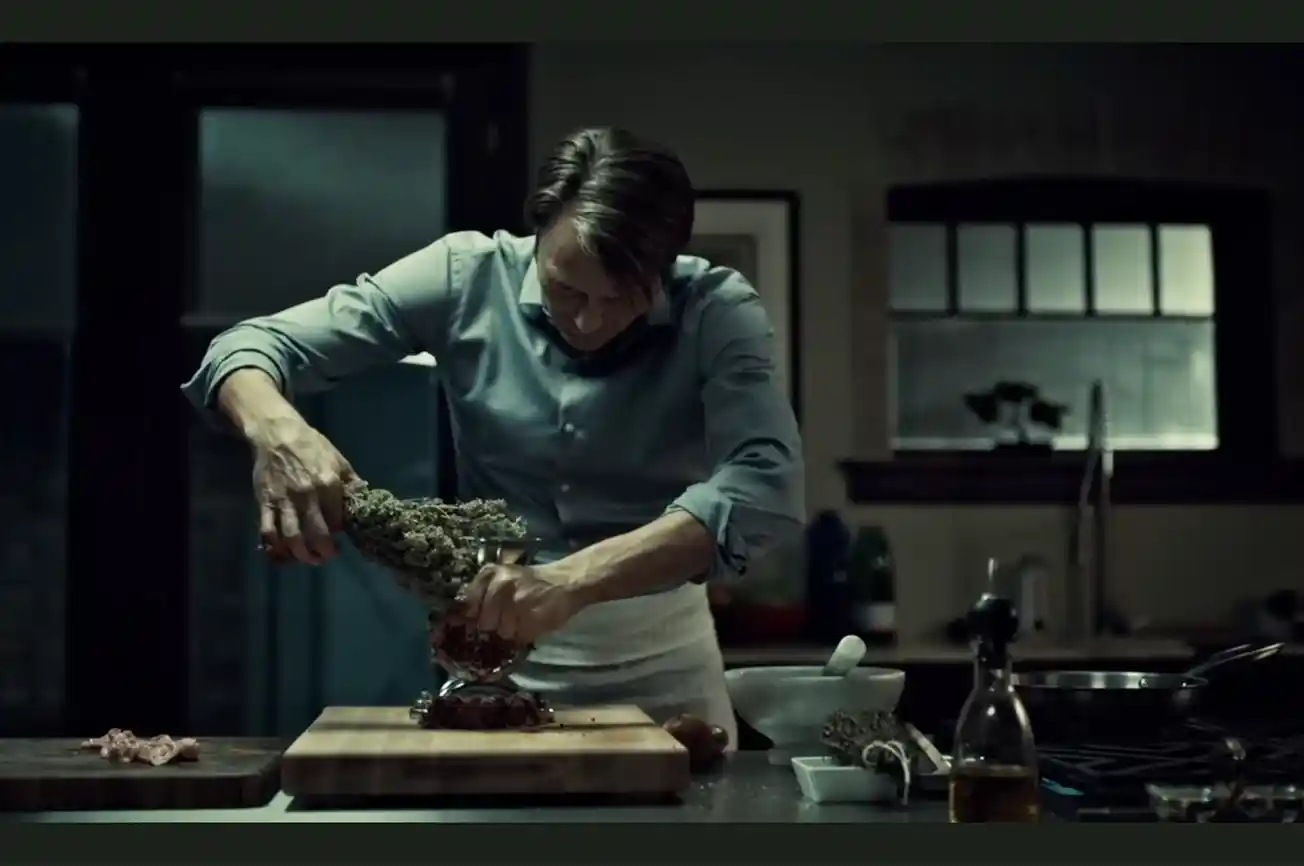
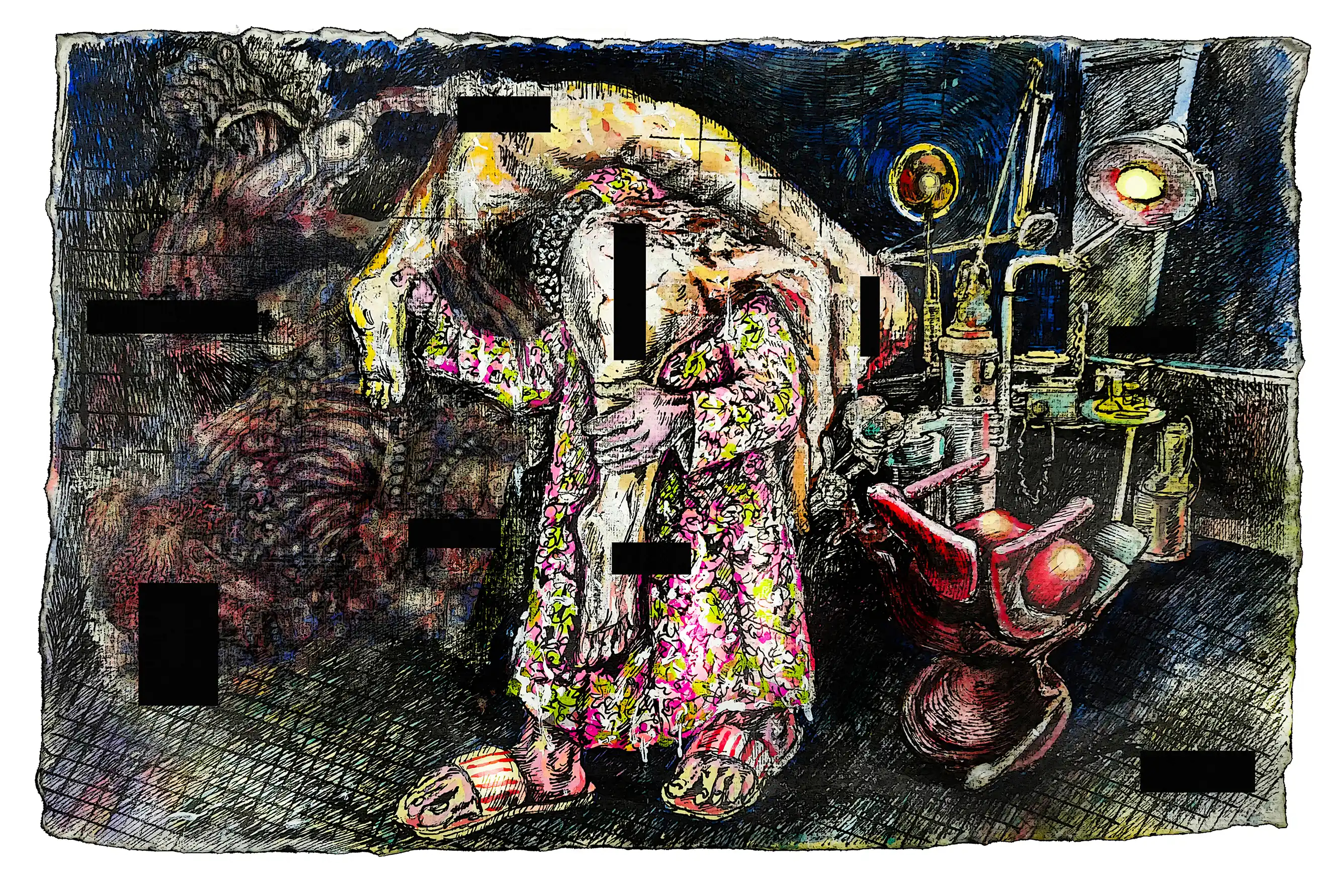
The Hannibal television series (2013-’15) uses the length accorded by the format to draw out these sequences. We see Lecter (Mads Mikkelsen), a dapper aesthete, spending hours in his artfully tidy kitchen lovingly prepping the meals. He kneads, grinds, coats and fries with the grace and expertise of a professional chef, and eats at a table lushly laden with fruits as Bach’s Goldberg Variations plays in the background. Separate these moments from their gruesome context (or simply watch one of the fan edits on YouTube) and they look like scenes from a sensual, decadent, hunger-inducing food film.
Created by author Thomas Harris, the serial killer may be the most prominent example of a cannibal-chef, the defining figure of a very specific subgenre of pop culture — the cannibal-culinary story. It includes films, books and shows which are about the cooking of human flesh and organs. Sensory pleasures are invoked through beautiful descriptions or shots of elaborate preparation, display and consumption in the tradition of food literature and cinema. This is where the chef-serial killer’s shared fondness for chopping is clearly on full view and where the cannibal story meets the food film.
Cannibalism has long been used in popular culture to explore a range of issues like survival, colonialism, religious ritual, consumerism, psychopathy, sexuality and revenge. The theme’s popularity is apparent in the way it has bled into cultural touchstones like The Simpsons (an episode titled Treehouse of Horror V sees children sent to detention ending up in the school cafeteria as food) and South Park (in the episode Scott Tenorman Must Die, the chili produced at a cook-off serves up a dish of cold revenge). Films such as The Texas Chain Saw Massacre (1974), Cannibal Holocaust (1980) or even the more recent Bones and All (2022) have presented their cannibals as societal Others, roving the margins, beyond the edges of cities and civilisation. In this, cannibal characters have much in common with other horror archetypes like vampires and zombies who also feed on the human body. These figures’ violations of the human form place them in a category marked by a fusing of the human and the animal. What however sets some cannibals apart from these posthuman figures is their weakness for cooked meals.
Cannibalistic cooking represents a coming together of civilisation and savagery, taking something potentially barbaric and masking it with the cloak of culture. In stories of vampires and zombies, the focus is almost always on the monsters themselves — because of their choice of diet which is openly vile and repulsive (blood, raw human flesh). But within the cannibal-culinary narrative, the focus is equally on the food. Cooking often enables the man-eater, characterised for long as a veritable beast, to enter and thrive in society. These stories therefore flaunt their cannibal characters as gastronomes and, typically, as members of the cultural elite. A connection is established between the creativity of a complex dish and the inventiveness of a complex killing, by positing a skilled operator behind both — someone who knows how to source unusual core ingredients and make them appealing.
The process of cooking also serves to camouflage the ingredient’s distinctiveness. Like his food, the cannibal hides in plain sight.
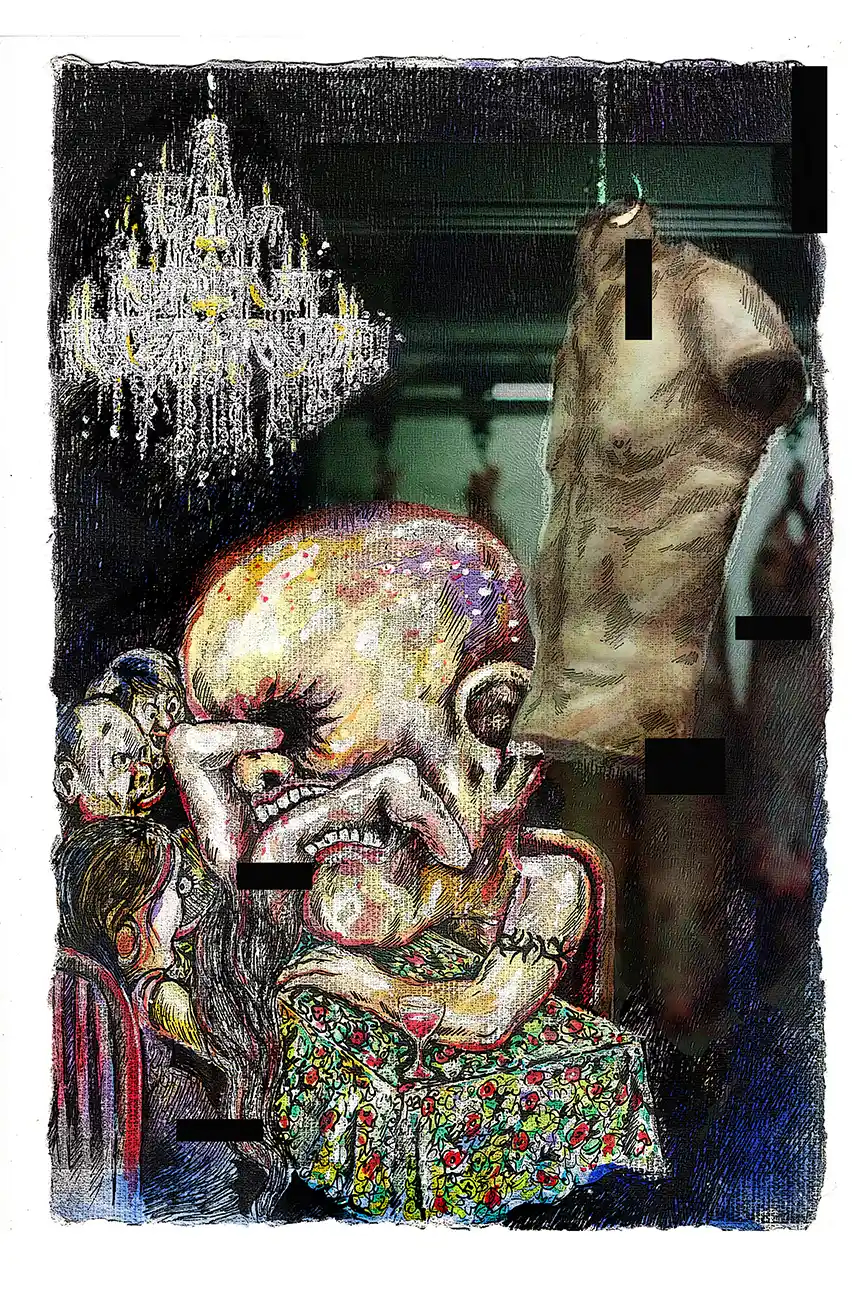
In Bangladeshi writer Mohammad Nazim Uddin’s 2015 novel Rabindranath Ekhane Kokhono Khete Asenni which was translated into English (Tagore Never Ate Here) in 2025, a restaurant in the sleepy border town of Sundarpur serves food that is as appetising and mysterious as its owner Mushkan Zubeiri. It posits flesh of man as the source of eternal youth and vigour, an idea also employed in the Hong Kong film Dumplings (2004) where aborted foetuses provide an antidote to female ageing. At the same time, the novel and the Bengali web series it inspired — Robindronath Ekhane Kawkhono Khete Aashenni (2021) directed by Srijit Mukherji — presents the shadowy restaurateur (Azmeri Haque Badhon), as a connoisseur of the arts. She is habitually framed in dim interiors infused with the feel of decadence and old money. Ornate furniture and paintings surround her as she hums Tagore songs to herself and rustles up food whose exact nature, like hers, is indeterminable. The Bangladeshi TV films titled Punorjonmo (2021-’23) similarly feature a famed chef (Afran Nisho) whose restaurant becomes a handy disposal site for his periodic killings. In these dark, lurid films featuring frequent references to ancient tribal practices from different parts of the world, people are killed both for (cannibalism) and with (poisoning) food.
The setting of the restaurant also allows for the implementing of another feature of these stories: the pleasure sought not just in eating but in serving the flesh of humans to unsuspecting diners and corrupting them in the process. Anybody can violate the accepted social and moral code with these dishes and not even know it or, worse still, enjoy themselves as we see them doing over and over again.
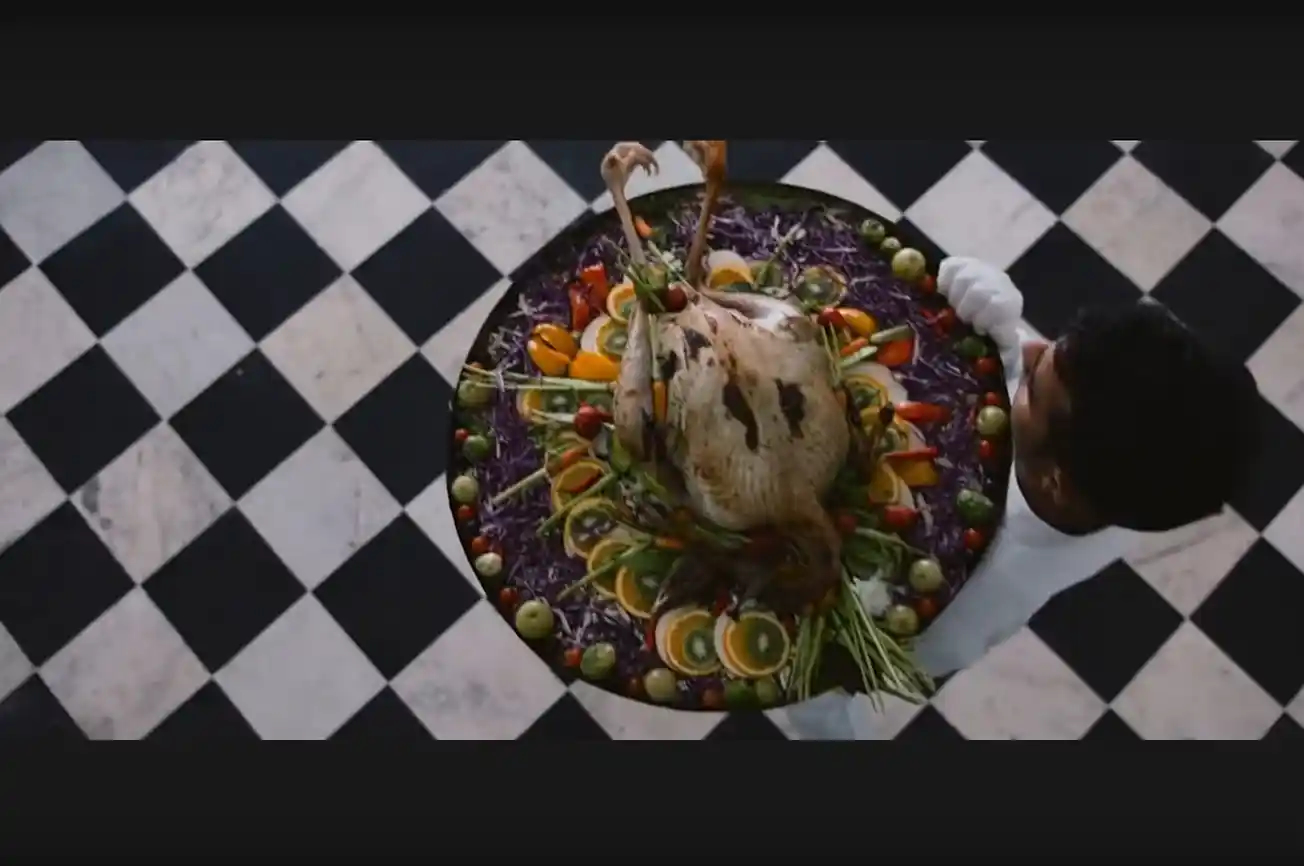
In the Hindi film The Hungry (2017), where bodies get stacked in the pantry like produce, the culmination of a violent cycle of revenge is an elaborate wedding feast made out of the remains of the bride’s son. We see the bride and groom, unaware, eating hungrily, as the camera slowly glides along the sumptuous layout of tender meat and seasoned ribs, until the lifting of a cloche turns their eagerness into violent nausea. In keeping with the conventions of the food film, these cannibal-culinary works exhibit visually extravagant fare that whets desire although this is food that is morally bad. It is the knowledge of that desire and the memory of that taste that produces the visceral reactions of aversion, fear and disgust — reactions directed at the food, the characters who are eating it and ourselves. In the Assamese film Aamis (2019; titled Ravening in English), Nirmali (Lima Das) retches and compulsively rinses her mouth when she learns that it was Sumon’s (Arghadeep Baruah) flesh that she had unwittingly eaten and savoured. The pair’s initial trips in pursuit of different kinds of meat are depicted realistically but light, colour and sound begin to get manipulated as the plot veers towards cannibalism, taking on the feel of a food film. Now, soft lighting is accompanied by lively music to signify anticipation. Vibrant dishes cascade across the screen, portioned and plated as gourmet food is.

But Aamis drew criticism. When the characters experimenting with unusual kinds of meat — like bat meat — move into the increasingly horrifying and taboo territory of cannibalism, scholars wondered whether the film did a disservice to the way Assamese and other North-Eastern cuisines have been perceived by mainland India. Within the East and South Asian contexts, cannibal-culinary stories and the food eaten become metaphors for stereotypical, factually incorrect or racist ideas related to food traditions comprising meats that are considered smelly, dirty or taboo. These stories also appear as warnings for the gastronomically adventurous who are made aware of the dangers. The stigma around consuming certain kinds of meat and fears around food hygiene and contamination also reiterate the burdens of purity culture, caste-based discrimination and imposition of strict dietary rules of vegetarianism.
In Aamis, the first time Nirmali tastes human meat, it transports her from her humdrum life to a flavourful transcendence. One kind of desire for the flesh comes to replace another — Nirmali and Sumon, despite their mutual attraction, cannot embark on a relationship since the former is married — and there is a slow piquing of Nirmali’s curiosity, a gradual awakening of her senses as Sumon tells her of the kinds of meat he has known people to indulge in. When she finally, unaware, bites into the human-flesh-filled duck eggs Sumon has assembled for her, she experiences pleasure the likes of which she hasn’t known before. As the flavours overwhelm her taste buds, she sits back closing her eyes. The scene cuts to flashes of her as if drifting through the air. The wind blows, the music swells and she is lifted into a state of rapture. It’s her first taste of what she calls “the fundamental flavour of life”.
These films posit the taste of human meat as divine and out of reach. Bringing this food into the sphere of the kitchen and glamourising it with the lighting, polish and close-ups of modern food photography gives it a certain credence; it is no longer viewed through the lens of revulsion. And by extension, the people indulging in such food don’t seem to be foul monsters but individuals who have cultivated a taste for the rarest of foods.
Does the fusion of the cannibal story and the food film tease us with a tantalising taste of ourselves?